A New Yorker by birth, Danny Lyon moved to Hyde Park in 1959 to attend the University of Chicago. He emerged in 1963 as a 21 year old kid with a B.A. in history, plunging straight into the turbulent maelstrom of the times. He marched against segregation and photographed the civil rights movement as staff photographer for SNCC (Student Nonviolent Coordinating Committee). He was in a jail cell next to Martin Luther King. Launched from such a potent combination of societal chaos and rebellion, his complete immersion in the lives of his subjects almost guaranteed that he would invent a unique personal form of documentary photography.
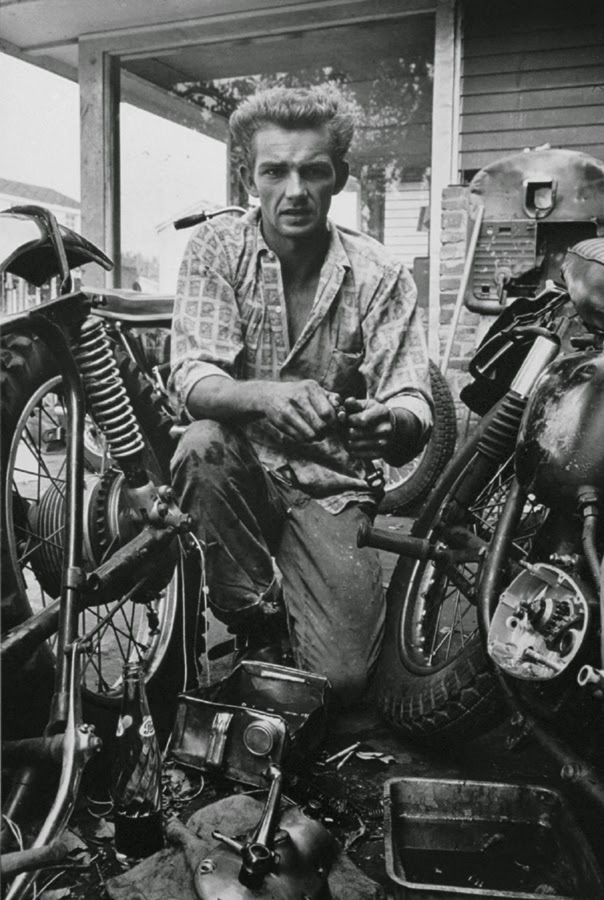
While still in college, Lyon had bought a ramshackle motorcycle, a 1956 Triumph TR6 built from "...parts that I had first seen in a garage, on a shelf, stored in five-pound coffee cans." He started attending rallies and races around the midwest; when
he joined the Chicago Outlaws in 1964 his peers (Hunter S. Thompson
among them) were concerned that he had fallen off the edge. Armed with a Nikon, a Rolleiflex and a seven-pound portable tape recorder he soon became
the MC's in-house photographer.
Just before
Easy Rider roared its way into American consciousness in 1968, Lyon published
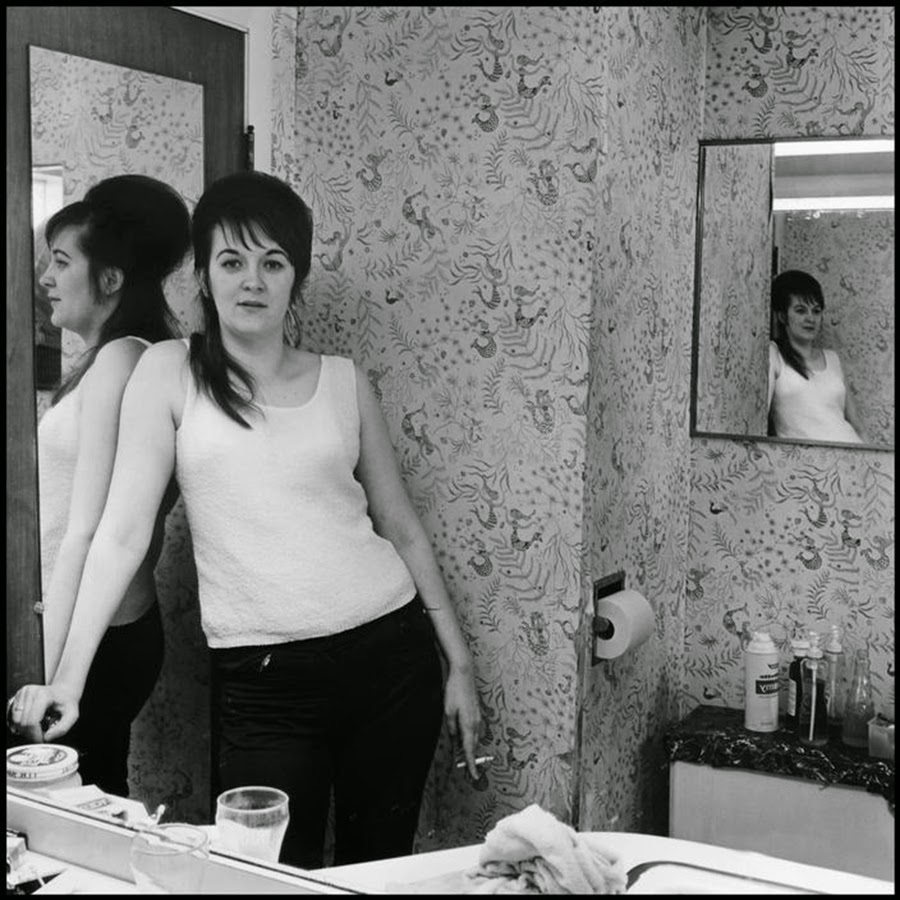
The Bikeriders, a chronicle of the Outlaws from 1963 to 1967. The book has emerged as one of the defining
photo books of the 1960s.
“
The material in this book was collected between 1963 and 1967 in an
attempt to record and glorify the life of the American bikerider. It is a
personal record, dealing mostly with bikeriders whom I know and care
for. If anything has guided this work beyond the facts of the worlds
presented it is what I have come to believe is the spirit of the
bikeriders: the spirit of the hand that twists open the throttle on the
crackling engines of big bikes and rides them on racetracks or through
traffic or, on occasion, into oblivion.”
After Lyon finished the project he moved back to New York, hoping to finding a publisher. His personality didn’t make up for his thin
credentials; even the title of the book was
disputed by copy editors who had never heard the term "bikerider".
But in 1968 Alan Rizler managed to get the book
published by the Macmillan company. Thousands of copies were printed, but none of the photographs were reproduced in color and there was hardly any press attention when the book was released. After Lyon
saw a copy of the book displayed in the front window of the East Village
bookstore he reportedly rode his motorcycle past the shop just to stare
at it. Eventually MacMillan offered him the
remaining copies for 60 cents apiece.
After completing
The Bikeriders Lyon was made an associate of
the prestigious Magnum Photos cooperative; when other
members noticed that he never attended any of the meetings the group
dropped him, though his work has remained in the Magnum archive ever
since. He continued to photograph important and personal stories with
integrity, from the demolition of downtown Manhattan to the brutal
prison system in Texas.
Lyon, now 72, doesn't want the Outlaws
sensationalized the way he feels "the straight press" did
at the time. He once wrote that his goal was
to "create photographs that would be stronger, more truthful, and more
powerful than
LIFE magazine," so that "
LIFE magazine would be destroyed."
The Bikeriders represented a significant step in American
photography of the 1960s, not only launching Lyon's photographic career but also
giving a younger generation of photographers a spokesman from their own
ranks. Lyon was part of the generation he was photographing; he was able
to speak with an authentic voice about his subjects, instinctively
understanding their aspirations and the reasons they were rebelling
against authority.
The Bikeriders was the first of a
dozen influential photo books on various subjects for which Lyon has garnered two Guggenheims, a
Rockefeller Fellowship, and NEA fellowships for both photography and film.
more:
The Bikeriders (Aperture Press)
The Chicago Outlaws Motorcycle Club rides again: Chicago Reader, April 2014
Bleak Beauty (Danny Lyon official website)